Friday, April 22, 2011

Alt Attribute & Search engine optimization

SEO Optimization images is becoming increasingly more important in SEO (Seo optimization) for websites. The ALT attribute is really a critical step that is sometimes forgotten. This can be a lost opportunity for better rankings.


In Google's webmaster guidelines, they advise using alternative text for that images on your site:

Images:. Use the alt attribute to provide descriptive text. Additionally, we recommend utilizing a human-readable caption and descriptive text around the image.

Why would they ask us to achieve that? The answer is simple, really; search engines like google have the same problem as blind users. They can't begin to see the images.

Many webmasters and inexperienced or unethical SEOs abuse using this attribute, trying to stuff it with keywords, hoping to achieve a certain keyword density, which isn't as relevant for rankings now since it was previously.

On the other hand, high keyword density can, on some search engines like google, trigger spam filters, which might result in a penalty for the site's ranking. Even without such a penalty, your site's rankings will not take advantage of this tactic.
This process also puts persons who use screen readers in a greater disadvantage. Screen readers are software-based tools that really read aloud the contents of what's displayed on the screen. In browsing the web, the alt attributes of images are read aloud too.

Imagine hearing a paragraph of text that is then repetitions of numerous keywords. The page will be not even close to accessible, and, to put it bluntly, would be found quite annoying.
What is an Alt attribute?

An ALT attribute should not be used like a description or perhaps a label for an image, though lots of people use it for the reason that fashion. Though it may appear natural to assume that alternate text is a label or perhaps a description, it's not!

What used within an image's alt attribute should be its text equivalent and convey the same information or serve exactly the same purpose the image would.

The goal would be to supply the same functional information that a visual user would see. The alt attribute text should function as a "stand in" in the event that the look itself is unavailable. Think about this question: If you were to replace the image using the text, would most users receive the same basic information, and would it generate the same response?
A few examples:


Some SEO Optimization Tips

If a search button is a magnifying glass or binoculars its alt text should be 'search' or 'find' not 'magnifying glass' or 'binoculars'.

If the image is supposed to convey the literal items in the image, a description is suitable.

If it's meant to convey data, then that information is what's appropriate.

If it's designed to convey the use of a function, then your function itself is what ought to be used.

Some Alt Attribute Guidelines:

Always add alt attributes to images. Alt is mandatory for accessibility and for valid XHTML.

For images that play merely a decorative role in the page, use an empty alt (i.e. alt="") or a CSS background image to ensure that reading browsers do not bother users by uttering such things as "spacer image".

Keep in mind that it's the function of the image we are trying to convey. For example; any button images should not include the word "button" within the alt text. They should emphasize the action performed by the button.

Alt text should be determined by context. The same image inside a different context may require drastically different alt text.

Try to flow alt text with the remainder of the text because that is the way it will be read with adaptive technologies like screen readers. Someone hearing your page should hardly be aware that a graphic image is there.
Please remember that utilizing an alt attribute for each image is required to meet the minimum WAI requirements, that are used as the benchmark for accessibility laws in UK and also the rest of Europe. Also, they are required to meet "Section 508" accessibility requirements in america.

It is useful to categorize non-text content into three levels:

Eye-Candy
Mood-Setting
Content and Function

I. Eye-Candy

Eye-Candy are stuff that serve no purpose other than to make a site visually appealing/attractive and (in many cases) satisfy the marketing departments. There isn't any content value (though there might be value to some sighted user).

Never alt-ify eye-candy unless there is something there that will enhance the usability from the site for somebody using a non-visual user agent. Make use of a null alt attribute or background images in CSS for eye-candy.

II. Mood-Setting

This is actually the middle layer of graphics which may serve to set the mood or set happens as it were. These graphics are not direct content and could not be considered essential, but they are essential in they help frame what is going on.

Try to alt-ify the 2nd group as is sensible and is relevant. There might be times when doing so might be annoying or detrimental to other users. Then avoid it.

For example; Alt text that is identical to adjacent text is unnecessary, as well as an irritant to screen reader users. I suggest alt="" or background CSS images in such cases. But sometimes, it's vital that you get this content inside for those users.

Most times it depends on context. The same image in a different context may require drastically different alt text. Obviously, content should always be fully available. The way you use this case is really a judgment call.

III. Content and Function

This is when the look is the actual content. Always alt-ify content and functional images. Title and long description attributes can also be so as.
The main reason many authors can't figure out why their alt text isn't working is they don't know why the images exist. You have to determined exactly what function a picture serves. Think about what it is about the image that's vital that you the page's intended audience.

Every graphic has a reason behind being on that page: because it either enhances the theme/ mood/ atmosphere or it is critical to what the page is trying to explain. Understanding what the look is perfect for makes alt text simpler to write. And practice writing them definitely helps.
A way to look into the usefulness of alternative text is to imagine reading the page on the phone to someone. An amount you say when encountering a specific image to make the page understandable to the listener?

Aside from the alt attribute you've got a couple more tools at your disposal for images.
First, in level of descriptiveness title is within between alt and longdesc. It adds useful information and can add flavor. The title attribute is optionally rendered by the user agent. Remember they are invisible and never shown like a "tooltip" when focus is received via the keyboard. (So much for device independence). So use the title attribute just for advisory information.
Second, the longdesc attribute points to the Link to a full description of an image. If the information found in an image is important to the meaning of the page (i.e. some important content would be lost when the image was removed), an extended description than the "alt" attribute can reasonably display should be used. It may provide for rich, expressive documentation of a visual image.

It should be used when alt and title are insufficient to embody the visual qualities of an image. As Clark [1] states, "A longdesc is a long description of an image...The aim is to use any period of description necessary to impart the facts from the graphic.

It would not be remiss to hope that a long description conjures a picture - the look - in the mind's eye, an analogy that is true even for that totally blind."

Even though alt attribute is mandatory for web accessibility and for valid (X)HTML, not all images need alternative text, long descriptions, or titles.

In many cases, you are best just going with your gut instinct -- if it's not essential to incorporate it, and when you don't have a strong urge to do it, don't add that longdesc.

However, if it's essential for the whole page to work, then you've to add the alt text (or title or longdesc).

What's necessary and what's not depends a great deal on the function of the image and it is context about the page.

Exactly the same image may require alt text (or title or longdesc) in a single spot, although not in another. If an image provides simply no content or functional information alt="" or background CSS images might be appropriate to make use of. However, if the image provides content or adds functional information an alt will be required and maybe a long description would be in order. Oftentimes this type of thing is really a judgement call.

Image Seo optimization Tips


Listed below are key stages in optimizing images:

Choose a logical file name that reinforces the keywords. You can use hyphens in the file name to isolate the keyword, but avoid to exceeding two hyphens. Avoid using underscores like a word separator, such as "brilliant-diamonds.jpg";

Label the file extension. For example, if the image search engine sees a ".jpg" (JPEG) file extension, it's going to assume that the file is really a photo, and if it sees a ".gif" (GIF) file extension, it's likely to assume that it is a graphic;

Make sure that the text nearby the image that's highly relevant to that image.
Again, don't lose a great opportunity to help your site with your images searching engines. Use these steps to rank better on all of the engines and drive increased traffic to your site TODAY.

Thursday, April 21, 2011

SEO Company


In 1999, years before major traditional publishing outfits cared about making money online or knew their bottom lines would soon depend on it, a small Melbourne startup called SitePoint figured out how to make money as the premiere destination for those looking to learn about building websites.


I remember my visits to SitePoint as a teenager fondly. I had a head full of ideas on grand businesses that would make me rich, and all I needed to do was pick up the skills to build them — or so I thought. I got my hands on the classic ‘Build Your Own Database Driven Web Site Using PHP & MySQL‘ by Kevin Yank and read SitePoint’s articles (this was before blogs existed) as often as I could.


In the end, things didn’t quite go as planned. My first job after high school and a bit of uni was (fortunately, before corporate life could claim me) my own business, which involved pushing out word count at breakneck speed, not creating web apps. Even still, I imagine those hours spent learning what SitePoint had to offer had a part to play in my early success, or I wouldn’t have know where to begin building my completely web-based service business.


Humble Beginnings


SitePoint was co-founded by Mark Harbottle and Matt Mickiewicz. Before SitePoint, Mark was a founding member and programmer with the company that developed HotDog, which you may remember as one of the few HTML editors available in 90s. Matt, on the other side of the world in Canada, had started a site that would soon become very popular — Webmaster-Resources.com, which these days redirects to SitePoint (and would probably sell for a small fortunate on the domain market).


By 2000, the two were working on SitePoint full-time and making advertising deals to keep the site in the black. In 2001, they turned their most popular tutorial into a book, which they sold themselves through a print-on-demand service.


The experiment was worthwhile, because the book was a success, enough to warrant a switch from the print-on-demand model to ordering large print runs. The company’s library today features books and kits on everything from running an SEO business to hosting your site using Amazon Web Services.


They’re also the company behind three popular marketplaces — 99designs, a design crowdsourcing site, Flippa, where users buy and sell websites, and Learnable, which is a platform for user-generated education.


Making Money with Information


SitePoint was one of the earlier companies in the world to bring in enough revenue from online content to support a growing staff — and on top of that, was listed several times in the BRW Fast 100, Deloitte Technology Fast 50, and the Deloitte Asia Pacific Fast 500. I spoke with co-founder Matt Mickiewicz to find out how they figured it out so early while News Corp continues to flounder years later.


“When we first launched our Forums in 1999, I made going in there, reading discussions, and helping out people personally one of my core daily activities. I used to answer hundreds of emails every week providing feedback to people about their websites, helping them troubleshoot problems, and in general be as helpful as humanly possible,” said Mickiewicz.


When the infamous ‘social media experts’ talk about building community as an essential part of doing business online, they’re not wrong — even if they don’t seem to know how to do that themselves. Putting some elbow grease into daily and helpful interactions with visitors put SitePoint in the right place for the company’s expansion into new markets. According to Mickiewicz, even SitePoint’s weekly newsletter would result in hundreds of email responses — something I’d be surprised to see today.


“SitePoint really was a community in every sense of the word, and when we published our first books and asked people to buy from us, we had build up a huge amount of trust and goodwill so that people happily opened up their wallets to us.”


Advertising’s No Golden Egg


In the last few years, the annual online ad spend has declined, but SitePoint still walks away with both a good profit and happy customers. To SitePoint, selling ad space isn’t just about slapping banners up when their clients’ ad-men send it over. They work hard to deliver extra value, and that means SitePoint doesn’t have to bring ad rates down to the point of commoditization while its competitors slash their inventory prices in desperation.


“Ad agencies & clients are as demanding as ever, so it’s our job to provide them with the absolute best customer service and justify our value and offer out of the box ideas to clients,” said Mickiewicz.


Mickiewicz and SitePoint started in an era when online advertising was a Wild West and have watched as Internet advertising standards were established by the IAB and the technology that made it possible to target their ad serving based on user demographics — things that have made the job of delivering a great experience for advertisers easier.


Even still, Matt doesn’t recommend that new media businesses rely completely on advertising revenue. “Products sales play a very important role in our business to this day in monetizing our traffic,” he says, though he’s not eager to tell me how much of their revenue is made up by products versus advertising.


“No one wants to buy advertising from you when you’re small, and when you get to a certain size you end up backfilling with ad networks which devalues your ad inventory.”


SitePoint’s continued success has been born of diversification. With a business that gets its revenue from marketplaces, subscriptions, advertising and a plethora of popular products, the company is largely resistant to recessions and market disasters — if one revenue source gets knocked out, they know they’ve got plenty of backups.


Gaining Discipline and a Strong Work Ethic at a Young Age


Entrepreneurs mostly fall short because they don't have the work ethic needed to start a business from nothing. It took a while, but I had to train myself to work 17 hours a day.


I've learned that it is the indirect work that an entrepreneur puts in that makes him or her successful. For instance, I continuously read new books that I feel may be pertinent to my job. I always take detailed notes so I don't forget the concepts.


If I'm not at the gym or sleeping for 7 or so hours, I'm available for my clients. This is what compels them to continuing working with my firm.


The biggest problem I have with my vendors is that it takes them too long to execute a request. Corporate America has set a standard of 8 hours a day - no more no less. It is imperative that the entrepreneur exploit this status quo and stand out from the crowd.


Advertising and Marketing on a Budget


I knew that I could not rely on cold-calling forever. Also, I am a firm believer that you should never rely on current clients. They can move companies and no longer need you, they can experience budget cuts, or you can have a disagreement that leads to a falling out.


However, pay-per-click would not work for me because candidates who yielded little to no return would kill my budget through costly clicks. Obviously it was important that job seekers visit my company's site, but they aren't the real revenue-drivers in the recruiting world. Therefore, I found various industry directories that were accessible to my target market and only cost a hundred or so dollars per advertisement annually.


Once I closed enough deals to support a marketing budget, I decided that we needed some form of SEO. I found a company out in California through the web and the sales representative, seemingly desperate for business, threw in 35 programmed new pages per month with the SEO.


At this point, I had an intern from NYU come to my apartment full time, and together we wrote over 150 landing pages. (Landing pages are website pages geared toward ranking on a particular keyword phrase or two and, mostly they are not linked to from your website's homepage.)


While their programming skills were satisfactory, when it came to SEO, my vendor had no idea what they were doing. Before we parted ways, over the course of approving programmed pages, my vendor sent me their programming and meta tags for my site.


This piqued my interest and I began studying SEO. I ended up studying it all day, every day. I knew it was the only way my company would grow. I read SEO blogs, contacted sites that would give links to recruitment agencies and, at this point I began the uphill battle that was cold-calling universities for.edu links.


In total, I probably contacted 350 or so university career centers in order to present my company as a career resource and, subsequently get a link from their site. I got a lot of resistance, mostly because I was a recruiter and recruiting has a certain low reputation, but some of the career center people were simply hard to negotiate with.


Partially, that's due to academia being its own, insular world, where rules apply differently than in the business world. A university in Arizona would not even accept donations to be listed because we were a staffing agency. Another university's career center got in a lot of trouble when the woman asked for $500 for us to be listed, but there was no cost for any other firm.


I knew something was wrong when she emailed me right away with a "First-Ever Best Career Center Intern Award" in which she would give cash to the student who did the best job of convincing her that they were the best intern and should get the money.


Then, there was my alma mater, who took a donation, only to tell me that the woman who swiped my credit card was no longer there and she didn't have authorization.


In the end, I ended up with only 30 or so links after literally days' worth of cold-calling hours. Even so, it was a higher number than my competition had. Right now, SEO is what fuels my business. We get around hundreds of visits a day and our advertising budget is a mere pittance compared to what most ad and marketing agencies quote.


This means that our firm does not need to attend trade shows and is not reliant on one particular customer to maintain a steady stream of revenue and fuel growth.


Recruiting the Right Employees From an Apartment


I started my business from a studio apartment on Manhattan's Upper West Side, and continued to grow it when my wife and I moved to a larger place on the East Side. But a Manhattan apartment with the attendant space restrictions it still very much was.


I decided to prioritize growing our online presence and business base, as described above, rather than investing in office space before it made logistical sense. But I was quickly busy enough that I couldn't run the business on my own, and that meant bringing on employees.


Recruiting employees to work out of your apartment is very difficult. This is especially true when they are of the opposite sex. I knew that remote employees would not work, as they have a significantly higher turnover rate than in-house employees.


Also, I wanted to hire entry-level people, and too much autonomy leads to failure at that experience level. I wanted them trained by me and not another recruiting firm, therefore we would have to teach them the business.


When I set out to get new full-time people, I already had our Managing Director, Alison, on board so it was a little easier, but many applicants would not consider working out of an apartment.


They would get very skeptical as to the legitimacy of the company. Most would not show up to the interview.


The only way to accomplish recruiting the right people was to increase the salary for the position to roughly 25% over market. It was worth it, as we found one great employee who would help us find the 4th member of the team.


We also assured our employees that we would get an office, a promise that we kept and signed a lease after a few months of the new team members being on board.


Recruiting, even if you have the tools, is a very difficult thing for a start-up. However, the hurdles I cleared can apply to many industries, not just staffing or consultancy services. Work hard, plan smart, and hire right. Aren't those the basics to any start-up's success? The trick is getting them right the first time, or if not, to try, try again.


Article Source: http://EzineArticles.com/6129956


seo optimization services


SEO Firm by jchain814

Thursday, April 14, 2011

Bench Craft Company on the subject of ebay


bench craft company

MLB leans toward extra replay for 2012, report says


Major League Baseball is leaning toward expanding replay for 2012 to include trapped balls and fair-or-foul rulings down the lines, a person familiar with the talks tells The Associated Press.


bench craft company

Multiple Sources Confirm New Nintendo HD Console - <b>News</b> - www <b>...</b>

Game Informer has heard from multiple sources that Nintendo will unveil its new home console at this year's E3 – or maybe even sooner.


bench craft company

Great <b>news</b>: Working population percentage drops to three-decade <b>...</b>

Great news: Working population percentage drops to three-decade low.


bench craft company


Seas0nPass jailbreak tool has for both Windows and Mac has been updated with the latest untethered exploit to untether the jailbreak on second generation Apple TV, running on the latest iOS 4.3.1 (4.2.1)


For those of you who don’t know, Seas0nPass jailbreak tool is like PwnageTool for Mac, or Sn0wbreeze for Windows, which can can create custom jailbroken .IPSW files for your second-gen Apple TV.


Before you proceed with the jailbreak, you will need the following:


  • A Micro-USB cable

  • iTunes 10.2.1

  • iOS 4.2.1 (Based on iOS 4.3) for Apple TV

  • Seas0nPass


All download links are posted at the end of this article.


Step 1: Download and launch Seas0nPass.


Step 2: Now select “Create IPSW” option to build your own custom jailbroken 4.3.1 firmware for Apple TV.


Step 3: Now wait for Seas0nPass to download all the files required for creating custom firmware.


Step 4: When prompted by Seas0nPass, connect your Apple TV using a micro-USB cable (leave power disconnected), and hold-down both the ‘MENU’ and ‘PLAY/PAUSE’ buttons for 7 seven seconds.


Step 5: iTunes should now open automatically to start the restore process.


Step 6: iTunes will confirm the restore when complete. Once done, your Apple TV will be fully jailbroken, untethered on iOS 4.3.1.


Once complete, remove the USB cable and connect the HDMI cable.


Once you are done with the jailbreak, you can install the following apps on your jailbroken 2nd-gen Apple TV:


  • How to Install XBMC Media Center on Apple TV 2G [Guide]

  • Plex Has Been Ported to Jailbroken Apple TV 2G ! [VIDEO]

  • How to Install NitoTV Weather and RSS App on Apple TV 2G [Jailbreak]

  • Apple TV 2G Gets Web Browser and Last.fm Apps via aTV Flash [Video]

  • Exposed VNC Server Plugin Enables Remote Access On Apple TV 2G


Required download links are as follows:


Download iOS 4.3.1 (4.2.1) for Apple TV
Download iTunes 10.2.1 for Mac OS X
Download Seas0nPass for Mac OS X
Download Seas0nPass for Windows


You can follow us on Twitter or join our Facebook fanpage to keep yourself updated on all the latest iPhone jailbreaking and unlocking releases.


Video calls were a mainstay of classic sci-fi films, and even today there’s something almost magical about seeing your friends and family on the screen of a portable device. Video calling has been around for some time, but it’s only really in the past year or so that its got more attention among regular users. That’s thanks in no small part to Apple and FaceTime, as found on the iPhone 4, iPad 2 and other gadgets from the company’s range. Read on as we give FaceTime the full SlashGear 101 treatment!


So Apple invented video calling, right?


No, not at all, though they did do a lot to make it easier to use – just as long as you have the right hardware. Video calling is actually a part of the 3G standard, which – if the carrier and whatever phone you’re using supports it, which isn’t the case in the US – has been available since around 2003. Unfortunately a combination of high pricing, poor understanding by users, mediocre quality and patchy reliability meant this form of video calling has never really taken off.


Apple’s FaceTime takes advantage of the company’s tight control over the iPhone, iPod touch, iPad and MacBook software, which has allowed it to polish the video calling experience to the point where everyday use is possible. Now FaceTime is available to anybody at the touch of an on-screen button.


Do I need an Apple phone to use FaceTime?


Not necessarily a phone, but definitely something with the Apple logo. FaceTime was first supported on the iPhone 4, which was Apple’s first mobile device with a front-facing camera (i.e. one that looks at the user, rather than out the back of the handset). The latest iPod touch and iPad 2 both have front-facing cameras and FaceTime support as well, and Apple has released a FaceTime app for its Mac and MacBook computers so they can join in the fun as well. FaceTime comes free on the mobile devices and the very latest Macs, and is a $0.99 download from the Mac App Store for earlier Mac owners.


Okay, so how do I use it?


It’s pretty simple, just as Apple was aiming for. On the iPhone you make a voice call in the normal way and then tap the FaceTime button on-screen to switch to video. On the iPod touch and iPad 2, you start a video call in the FaceTime app. You’ll need an Apple account in order to make and receive calls, since that’s used as the “phone number” for devices other than the iPhone 4.


Currently, FaceTime video calls can only be made when you have a WiFi connection, not when you’re using the mobile network for data. That’s a limitation Apple has put in place itself, though the company has said it is working on removing it in the future.


I’m not into Apple, can I video call with something else?


You certainly can, though the process gets a bit trickier. Various apps are available for Android and other mobile phone platforms which promise video calls, sometimes over not only WiFi but the 3G mobile networks too. That means you can make video calls when away from your home network or a WiFi hotspot, as long as your signal is strong enough.


Skype, Fring and Qik are all among the companies offering video calling apps, though their effectiveness often varies on a phone-by-phone basis. Not all phones have front-facing cameras, either, though they’re becoming more common on the latest handsets. A future SlashGear 1010 feature will look at the best video calling apps if FaceTime isn’t your thing.


Apple has said it plans to open up FaceTime to other manufacturers, so that non-Apple phones can make and receive calls too, but so far there’s no sign of that actually happening.


More information at Apple’s FaceTime page.


bench craft company

bench craft company
Next, Odeo moved into an office and started hiring more employees – including a quiet, on-again, off-again Web designer named Jack Dorsey and an engineer named Blaine Cook. Evan Williams became Odeo's CEO.


By July 2005, Odeo had a product: a platform for podcasting.


But then, in the fall of 2005, "the shit hit the fan," says George Zachary, the Charles River Ventures partner who led the firm's investment in Odeo.


That was when Apple first announced iTunes – which included a podcasting platform built into every one of the 200 million iPods Apple would eventually sell. Around the same time, Odeo employees, from Glass and Williams on down, began to realize that they weren't listening to podcasts as much as they thought they would be.


Says Cook: "We built [Odeo], we tested it a lot, but we never used it."


Suddenly, says Zachary, "the company was going sideways."


By this point, Odeo had 14 people working full time – including now-CEO Evan Williams and a friend of his from Google, Christopher "Biz" Stone.


Williams decided Odeo's future was not in podcasting, and later that year, he told the company's employees to start coming up with ideas for a new direction Odeo could go.  The company started holding official "hackathons" where employees would spend a whole day working on projects. They broke off into groups.


Odeo cofounder Noah Glass gravitated toward Jack Dorsey, whom Glass says was "one of the stars of the company."  Jack had an idea for a completely different product that revolved around "status"--what people were doing at a given time.


"I got the impression he was unhappy with what he was working on –  a lot of cleanup work on Odeo."


"He started talking to me about this idea of status and how he was really interested in status," Glass says. "I was trying to figure out what it was he found compelling about it."


"There was a moment when I was sitting with Jack and I said, 'Oh, I do see how this could really come together to make something really compelling.' We were sitting on Mission St. in the car in the rain. We were going out and I was dropping him off and having this conversation. It all fit together for me."


One day in February 2006, Glass, Dorsey, and a German contract developer Florian Weber presented Jack's idea to the rest of the company.  It was a system where you could send a text to one number and it would be broadcasted out to all of your friends: Twttr.


Noah Glass says it was he who came up with the name "Twttr." "I spent a bunch of time thinking about it," he says.  Eventually, the name would become Twitter.


After that February presentation to the company, Evan Williams was skeptical of Twitter's potential, but he put Glass in charge of the project. From time to time, Biz Stone helped out Glass's Twitter team.


And it really was Glass's team, by the way. Not Jack Dorsey's.


Everyone agrees that original inkling for Twitter sprang from Jack Dorsey's mind. Dorsey even has drawings of something that looks like Twitter that he made years before he joined Odeo. And Jack was obviously central to the Twitter team.


But all of the early employees and Odeo investors we talked to also agree that no one at Odeo was more passionate about Twitter in the early days than Odeo's cofounder, Noah Glass.


"It was predominantly Noah who pushed for the project to be started," says Blaine Cook, who describes Glass as Twitter's "spiritual leader."


"He definitely had a vision for what it was," says Ray McClure.


"There were two people who were really excited [about Twitter,]" concurs Odeo investor George Zachary. "Jack and Noah Glass. Noah was fanatically excited about Twitter. Fanatically! Evan and Biz weren't at that level. Not remotely."


Zachary says Glass told him, "You know what's awesome about this thing? It makes you feel like you're right with that person. It's a whole emotional impact. You feel like you're connected with that person."


At one point the entire early Twitter service was running on Glass's laptop. "An IBM Thinkpad," Glass says, "Using a Verizon wireless card."


"It was right there on my desk. I could just pick it up and take it anywhere in the world. That was a really fun time."


Glass insists that he is not Twitter's sole founder or anything like it.  But he feels betrayed that his role has basically been expunged from Twitter history.  He says Florian Weber doesn't get enough credit, either.


"Some people have gotten credit, some people haven't. The reality is it was a group effort. I didn't create Twitter on my own. It came out of conversations."


"I do know that without me, Twitter wouldn't exist. In a huge way."


By March of 2006, Odeo had a working Twitter prototype. In July, TechCrunch covered Twttr for the first time. That same summer, Odeo employees obsessed with Twitter were racking up monthly SMS bills totalling hundreds of dollars. The company agreed to pay those bills for the employees. In August, a small earthquake shook San Francisco and word quickly spread through Twitter – an early 'ah-ha!' moment for users and company-watchers alike. By that fall, Twitter had thousands of users.


By this point, engineer Blaine Cook says it began to feel like there were "two companies" at Odeo – the one "Noah and Florian and Jack and Biz were working on" (Twitter) and Odeo. Twitter, says Ray McClure, "was definitely the thing you wanted to be working on."


Over the years, entrepreneurs and corporate executives have devised any number of clever ways for getting rich off the working poor, but you'd have to look long and hard to find one more diabolically inventive than the RAL. Say you have a $2,000 tax refund due and you don't want to wait a week or two for the IRS to deposit that money in your bank account. Your tax preparer would be delighted to act as the middleman for a very short-term bank loan—the RAL. You get your check that day or the next, minus various fees and interest charges, and in return sign your pending refund over to the bank. Within 15 days, the IRS wires your refund straight to the lender. It's a safe bet for the banks, but that hasn't stopped them from charging astronomical interest rates. Until this tax year, the IRS was even kind enough to let lenders know when potential borrowers were likely to have their refund garnished because they owed back taxes, say, or were behind on child support.


Hewitt didn't invent the refund anticipation loan. That distinction belongs to Ross Longfield, who dreamed up the idea in 1987 and took it to H&R Block CEO Thomas Bloch. "I'm explaining it," Longfield recalls, "but Tom is sitting there going, 'I don't know; I don't know if people are going to want to do that.'"


Tax-prep shops are as common as fast-food joints in many low-income neighborhoods—there are at least half a dozen on one three-block stretch of South Broadway in Yonkers, N.Y., where these photographs were taken. A few offer reasonably priced accounting, while others charge hundreds of dollars for 20 minutes of work. But Longfield knew. He worked for Beneficial Corp., a subprime lender specializing in small, high-interest loans for customers who needed to finance a new refrigerator or dining-room set. His instincts told him the RAL would be a big hit—as did the polling and focus groups he organized. "Everything we did suggested people would love it—love it to death," he says.


He also knew Beneficial would make a killing if he could convince tax preparers—in exchange for a cut of the proceeds—to peddle this new breed of loan on his employer's behalf. Ultimately, Longfield persuaded H&R Block to sign up. But no one was as smitten as John Hewitt—who understood that people earning $15,000 or $20,000 or $25,000 a year live in a perpetual state of financial turmoil. Hewitt began opening outposts in the inner cities, Rust Belt towns, depressed rural areas—anywhere the misery index was high. "That was the low-hanging fruit," he says. "Going into lower-income areas and delivering refunds quicker was where the opportunity was."


Customers wanting a RAL paid Jackson Hewitt a $24 application fee, a $25 processing fee, and a $2 electronic-filing fee, plus 4 percent of the loan amount. On a $2,000 refund, that meant $131 in charges—equivalent to an annual interest rate of about 170 percent—not to mention the few hundred bucks you might spend for tax preparation. "Essentially, they're charging people triple-digit interest rates to borrow their own money," says Chi Chi Wu, a staff attorney at the National Consumer Law Center.


In 1988, the first year he began offering the loans, Hewitt owned 49 stores in three states. Five years later, he had 878 stores in 37 states. And five years after that, when Cendant Corp.—the conglomerate that owned Avis, Century 21, and Days Inn—bought Jackson Hewitt for $483 million, his earliest backers received a $2 million payout on every $5,000 they'd invested. Today, with 6,000 offices scattered across the country, Jackson Hewitt is more ubiquitous than KFC, and has about as many imitators.


THERE WOULD BE NO refund anticipation loans, of course, without tax refunds. And by extension there would be no RALs without the Earned Income Tax Credit, the federal anti-poverty initiative that served as the mother's milk nourishing the instant-refund boom. Welfare reform was the catalyst for the EITC, which was aimed at putting extra cash in the pockets of low-income parents who worked. What motive does a single mother have to get a job, conservative thinkers asked, if there was scant difference between her monthly take-home pay and a welfare check? It was Richard Nixon who first floated the idea that led to the Earned Income Tax Credit; Ronald Reagan dubbed it "the best pro-family, the best job creation measure to come out of Congress." In 2007, the US Treasury paid out $49 billion to 25 million taxpayers.


bench craft company

Groundwater radiation level at nuke plant rises: TEPCO | Kyodo <b>News</b>

The concentration levels of radioactive iodine and cesium in groundwater near the troubled Nos. 1 and 2 reactors at the Fukushima Daiichi nuclear power plant have increased up to several dozen times in one week, suggesting that toxic ...


bench craft company


Google <b>News</b> Blog: New Google <b>News</b> for Opera Mini

While the Google News team has been hard at work redesigning our service for smartphones, we've also been thinking about our milllions of users around the world who access the web not from a smartphone, but from a feature phone, ...


Tuesday, April 12, 2011

Roofing Contractors Vancouver - 5 Questions to Ponder

Roofing Vancouver - Faq's


1. Repair or Replace?

There's no opinion like an expert opinion. Most contractors will provide you with a free estimate. Get a summary of a few trusted contractors and contact them well in advance of when you want to obtain your roof fixed so you can compare costs and opinions.


2. Beauty versus Practicality?

Discuss this together with your spouse or partner. (The children could care less...at least the young ones.) The fact is, nobody wants an ugly roof the same as nobody wants to be seen with bed hair. If you've got a great quality roof and you simply have to repair it, it's worth it to pay for the cost of the initial shingle instead of doing patchwork. A roof replacement doesn't happen frequently (we hope!) and so make a choice that suits you and your loved ones well or it'll stand out like a sore thumb everyday you decide to go home.


3. Should I replace the roof in order to sell the house for more?

Consider this very carefully prior to making a choice. With respect to the roofing material you select, a new roof can last between twenty, fifty, to one-hundred years! This means you have to check the year of the roof that's currently over your head first. Are you at year 18 of a 20-year warranted roof or year 30 of the 50-year warranted roof? Obviously, the standard is what makes the roof keep going longer, but if you're not likely to remain in your present home throughout your life, the higher expense might not be worth your investment. Although a new roof can enhance the worth of your value, the increase may not be enough to cover your investment and that's bound to hurt your wallet.


4. Is it a good idea for me to repair the roof myself?

Sure it's. Before you do, consult a specialist first. You can perform it yourself, however, you shouldn't be a complete ‘lone ranger.' With respect to the extent of the repair, you may or may not convince you. Either way, it helps to get a professional eye on the problem first and maybe even a free quote so you can do the math later and find out if it's truly worth your time, sweat, and cash to be mister or miss fix-it.


5. When is a good time to get the roof replaced?

Weather can cause delays from days to weeks. Most people plan ahead to have their roof replaced in the summer when they know someone will be home throughout the day for a solid fourteen days. Once you have this period in mind, create a call to some trusted contractor months ahead of time to obtain a quote. Some companies get booked up fast and chances are, they're the most reputable. Preparing in advance from the summer also provides you with time for you to ask around many compare costs...especially if you want to have the roof made by a specified date.


The Top Roofing Company In Vancouver!

It is possible to leak inside your home's roof? Have you lost shingles or tiles inside a storm? Have overhanging branches caused damage? Is your roof a lot more than Two decades old and showing its age? Are your gutters overwhelmed and draining poorly?

When the answer to any of these questions is "Yes" it is time to call the top roofing company Vancouver - Crown Roofing & Drainage.

For more than a century Crown Roofing has been the roofer of choice among our Vancouver neighbors. We provide complete roofing services, from emergency repairs and roof restoration, to complete roof replacement. All using the finest quality materials, installed with precision and also the highest degree of customer support.

YOUR Vancouver ROOF DESERVES NO LESS!

The rooftop of the Vancouver house is the first line of defence against wind, rain, snow, ice along with other weather elements. Make sure it's as much as the job. Among Vancouver Roofing companies, only Crown Roofing has the depth of experience and successful history to ensure your roofing system is going to be properly designed and installed.

NEIGHBORS HELPING NEIGHBORS.

One reason Crown Roofing continues to be the most successful roofing contractor in Vancouver is our resolve for our neighbors. We treat your house as though it were our very own and that we were building a roof to protect our own family. That's what neighbors do, and you will rely on Crown Roofing being here to support you and back our work. In the end, we've been repairing and replacing roofs in Vancouver since 1902!

Obtain a FREE INSPECTION AND EVALUATION OF YOUR Vancouver ROOF.

Go to the Roofers Vancouver for a FREE inspection and evaluation of your roof. Give you the very best roof for your Vancouver home, in the best value. We build roofs to last!


Monday, April 11, 2011

Tacoma Roofer: Help your house be Beautiful

Very few people view the value of a solid roof, but your knowledgeable Tacoma Roofing contractor does. From top notch experience, they'll be in a position to let you know why you need a strong, secure, and leak-free roof on your home.

The local Tacoma Roofing contractor is well aware how important a financial investment your property is for you, especially since it is a lasting one. Your house may have been damaged slowly over the years and you have to take steps to minimize this damage. For a lot of people, keeping their house beautiful is also a few pride. You will find those too who'd prefer to turn their property into a economical and efficient living place. Your roof is a valuable part of your property and plays a role in each of the aspects mentioned previously. For this reason, you need to employ the expertise of qualified a Tacoma Roofer.

Kinds of Roofs installed by a Tacoma Roofing company


One of the more common kinds of roofs are asphalt shingles, steel or metal sheeting, fiberglass, slate and terra cotta tiles.

Each type of roof invites distinct problems, but they can be easily looked after by a trusted Tacoma Roofing contractor. It's imperative that you nip roof problems within the bud before they become too costly or dangerous. You are able to schedule a scheduled appointment with the Tacoma Roofing company to consider a glance at your roof to determine if you will find any issues or potential problems with it. If there are, they may be in a position to tell you how to deal with them.

A Tacoma Roofing contractor Helps you to Build Strong Homes


The exteriors associated with a house, primarily the roof and gutters, face the onslaught of bitter and varying weather conditions, day after day. Painting, repairing, and cleaning gutters might be necessary. In some cases you might want to replace them completely. Usually, when your gutters show signs and symptoms of trouble, your roof also needs to be inspected for problems. Whatever issues there may be, an experienced Tacoma Roofing contractor can examine them in detail and suggest the remedy.

If your gutters often clog all too often, or there are leaks across the walls of your home, it may imply that there's debris piled up on the roof. Loose branches, piles of leaves, and other light objects that are swept onto your roof during a storm can all contribute towards damaging your roof, which damages could be lasting. A knowledgeable Tacoma Roofing company will explain that birds, mice, and other types of rodents often build nest within the debris that collects on the top. While these nests may look rather innocent, they are great at collecting moisture, which can lead to loose shingles, mold, and indoor leaks in your house. In addition, this may also cause vermin infestation. Following a storm, your Tacoma Roofer will suggest that you inspect your homes roof for any signs and symptoms of debris or damage.

Reverse Damages with the Help of a Tacoma Roofing contractor


However top quality the roof might be, it will eventually wear down with time. You will find shingles which are known as "25 year" or "30 year" shingles, but those numbers are only related to warranty produced by the manufacturers. They seldom require that long. Realistically speaking, "25 year" shingles will not last a lot more than fifteen to twenty years. In an area that is vulnerable to storms, shingles or the entire roof may need to get replaced every ten years. With a Tacoma Roofer, the cost is going to be less than what you believe.

If there you lose any shingles, or there's some harm to them, a Tacoma Roofing company can help you. Damaged shingles can result in indoor leaks, since the substrate from the roof becomes exposed to the elements. Shingles which are loose or broken can slip off and pose a possible hazard to people standing below. Missing shingles produce a gap which allows rain, wind, ice, and debris to develop under the adjoining shingles, which creates a "domino effect" that affects other shingles plus they become loose or broken. A comprehensive investigation is going to be produced by your local Tacoma Roofing company, if you call them up with your suspicions of loose or missing shingles.


Your Tacoma Roofing contractor come in a situation to inform you what the smartest choice is for your roof. If your roof isn't inside a good shape, it's advised that you have it replaced completely. The Tacoma Roofer may take you thru the various roofing possibilities to you which will fit your requirements as well as your budget.

Tacoma Roofing company: Improving your Home's Efficiency


Your roof shelters you against storms, sleet, and hail. By giving adequate ventilation, your roof protects your house from overheating, and by holding in the heat, it keeps your home warm. That's why you ought to prepare your roof from indoors as well as outdoors for just about any sort of weather emergency. A Qualified Tacoma Roofing company can offer help in this case.

First of all, inspect your homes roof thoroughly for just about any and all sorts of type of damage, prior to the beginning of a new season. The gutters should be clear, debris should not be piled on or trapped under shingles, tthere shouldn't be homes of squirrels or birds in the eaves or attic, and also the roof should be structurally sound. For your last part, you will need the assistance of the local Tacoma Roofing company. It can be quite dangerous to climb to the roof of your house. This is where the contractor from Tacoma Roofer comes in. He'll check out the strength and security of the roof and shingles, and do a general inspection from the entire roof structure, to make sure that it is in proper working order. They will be in a position to point towards issues that you have to keep an eye on and problems you may not have spotted.

You will need all the assist you to can get from the Tacoma Roofer. You can help your roof by installing a gutter guard or leaf cover to help prevent debris from forming in your gutters. The extra weight of debris prevents the gutters from draining and may even tear them down. Look into the fasteners in your gutters and if they are loose, tighten them. Do something to alter worn screws and brackets. For those who have a chimney in your house, inspect the bricks and mortar signs of wear. A trusted mason can be recommended because of your Tacoma Roofer, if you will find any repairs to be done.

Tacoma Roofer: Someone You Can Rely on
In the event that you know or suspect that there's a problem, your Tacoma Roofer ought to be contacted. They can use their knowledge and expertise to obtain your house in ace condition by simply focusing on the roof. Your roof deserves attention. So call them today, to enable them to conclude caring for your roof.


Sunday, April 10, 2011

What is Distinction between Commercial Roofing Companies From Residential Roofing Companies

If you are getting a roofing company to re roof your house or building then you may be wondering what are the differences are between residential roofing companies and commercial roofing companies. To start with, the one huge difference is usually that times a commercial roofing company may have signed a contract with and become obligated to some roofing union in able to work on union commercial jobs.

If this is the case then their labor costs will prohibit them from focusing on non union residential jobs. Beyond that, if a commercial roofing company hasn't signed an agreement with a union they might be outfitted just for commercial jobs which of course means their workers and equipment might not be in line with smaller residential jobs.

Residential roofing contractors in general tend to run smaller companies and hence, are more in a position to bid competitively on residential jobs, which are usually smaller than comercial jobs. Actually, quite often residential roofing contractors will run one man operations, where the contractor that you simply talk to could be the one which actually does the job about the building.


commercial by jpignanello

Also, liability insurance for commercial roofing is more expensive along with a larger bond is required for a commercial roofing work which can make it not economical for any commercial roofer to complete residential roofing jobs.

Still one more factor is that commercial jobs can operate on a tighter time period for just about any quantity of reasons, requiring an industrial contractor to train on a larger crew or crews which again makes smaller jobs not as profitable on their behalf.


Distinction between Commercial Roofing and Residential Roofing

Are you aware that the rooftop of the building has a huge effect on the entire structure itself? Damage caused to roofs due to natural or another disasters leads to a considerable lack of property everywhere. The type of materials used to construct the roof that ought to be sturdy and long lasting, the way where the roof has been installed and even its timely maintenance are very crucial. There's two kinds of roofs that are utilized on all of the buildings that people see around us: commercial and residential. Although it might seem that commercial roofing is done only for businesses or offices and residential roofing is done for apartments and houses, in reality the differences tend to be more complicated than that.


Residential roofing During by Kellys Property Services

Residential roofing is generally completed just by one hired contractor but commercial roofing typically takes a whole team to complete the task. This is because a commercial roof is commonly larger when it comes to square feet than a residential roof.
Commercial roofs are necessary carefully keeping the nature and purpose of your building in your mind. For example, if there is a restaurant within the building then external components like ventilation systems, smoke stacks and pipes is going to be required. Residential roofs usually do not have such components apart from a chimney or two at most.
Commercial roofs tends to be flat in design to support further changes at a later period, whereas most residential roofs have peaks and other architectural features like roof gardens.
Commercial roofing is much more expensive than residential roofing because of the special tools, materials and safety equipment which are needed onsite. Often the patching or maintenance work is completed in segments unlike for any residential roof in which the repair or replacement work can be completed in a short while. This really is one more reason why the equipment employed for residential roofs is usually smaller and less costly as well.
Commercial roof installations have a extended period to complete in comparison to residential roof installations and are usually constructed in large sections. During this phase however, it is important to ensure that there are no leakages, cracks or any other visible deterioration signs as it can certainly cause considerable damage to the whole building.
You should install the right roof for a building depending on its purpose. Ensure that you hire a construction company that uses first class materials and it has the best equipment for the job or your investment risk turning out to be considered a huge loss later.


Commercial Roofing Contractors: How to Find a Qualified Commercial Roofing Company

If your clients are looking to have work done on its roof, you should work with commercial roofing contractors which have an enthusiastic understanding of any special needs that the business might have. As an example, a roofing job is often disruptive for that operation of business as usual. For this reason, it might be essential for the company to become temporarily shut down, or for the roofing to take place after business hours have ended. A roofer that understands these needs can function plus a business in order to make sure that these types of issues are minimized.


Roofing Contractor, Denton, TX, Roof Masters, 940-566-3407 by SMBadvertising

The first thing that a company must do when it's trying to find commercial roofing contractors is to discover who other businesses in the region will work through. Obviously, this information will not be helpful if it may come as an indicator from competitors, but you will find circumstances in which it's not too hard to find these details from suppliers or retailers. Since roofing is not an industry-specific service, this information is readily available.

It is a good idea for any business to obtain touching at least three commercial roofing contractors to make bids about the price. In this manner, the company can often get a better price. It's also important to make sure that each of the roofing contractors is licensed and bonded. These details are available by permitting touching the state contractor's board. This also assists you to determine whether there have been any claims filed from the company previously.

When examining bids, it is just as vital to check out what services are now being offered and which products will be used because it is to look at the overall cost. The prices can differ quite drastically, but as tempting as possible to choose the cheapest bid, this isn't always your best option. Oftentimes, more costs now means fewer costs in the long run due to a poor roofing job. To further investigate the quality of the job, it is a good idea to check using the Bbb to be able to find out if the company continues to be accredited, and if it has not, to at least see what its rating is.


Selecting a Commercial Roofing Contractor


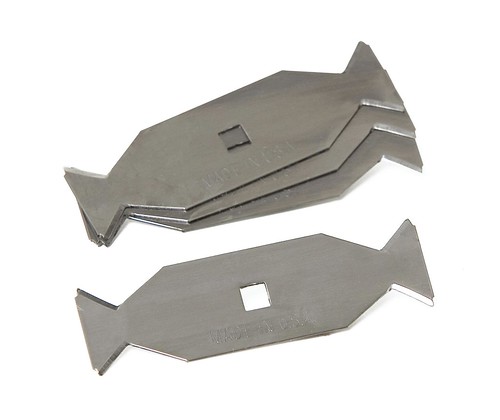
059-BTB AJC Bowtie Blade (5 blades per pack) by AJC Tools

When you're looking for a roofer for your commercial roofing project you need to find a contractor who understands the special needs of a commercial roofing project. For instance it can be harder to operate on a business during business hours so either the company has to be turn off for that repair or replacement or even the job needs to be done after conventional business hours. Is the roofer you are thinking about for the job willing and able to work around your schedule constrictions that might involve working weekends or evenings?

When you begin your search for any roofer not only do you have to answer those questions but you should also hire a company which will do a high quality job without a great deal of time delays. Going about finding someone can feel as an obstacle in itself but there are some ways to make the search easier.

Ask friends and family for referrals and then try to find at least three contractors to provide you with written bids in your job. Before you go any further you need to make sure that the contractors you are considering are fully licensed and bonded. An easy search using the state contractor's board will verify if your roofer is licensed and when you will find any past judgments or claims against their license.

When you select three or four roofers to put bids, you should get ready for that bids to become widely varied. Roofers will have brand preferences which will vary and could factor in more or less compared to next guy for a labor estimate. The greater detailed a written bid is the more helpful it will be for you to see where the cost are going to be incurred. Don't, however, pick a roofer based solely about the bid price. Any low ball bids may be tempting to consider, but if they're low because of low quality workman ship it may not be worth it in the end.

As the saying goes, you generally get that which you pay for, if you are able to afford a mid-priced bid it's always a good idea to increase in your price range rather than down. You also should select your roofer based on how professional they were and just how comfortable you anticipate you'll be dealing with them.

Finally your cost will be different based on what type of roofing material you choose as well as the cost to haul your old roof to the landfill. If you are looking for places to cut corners in your roof, instead of cutting labor cost you might want to inquire about metallic roof option. Metal roofs can be economical and efficient which makes them overall money savers for the long run, and on commercial buildings they can be really low maintenance. Plus since they can be put on top of a current roof, you don't need to have the old one removed and hauled away, that make a large effect on your cost.

Selecting a comerical roofing company nearer your home, doesn't have to become a struggle. For more information, visit http://www.vancouverroofers.net